
Self-neglect stays hidden
Each agency sees part of the decline. An assessment can close on what the person says, without seeing what others have recorded.
For adults
Self-neglect, abuse by a carer and exploitation often show up as small, separate contacts with a GP, a charity, the fire service or a hospital. ServiceLine puts them on one timeline for adult safeguarding teams.
Each agency sees part of the decline. An assessment can close on what the person says, without seeing what others have recorded.
Cancelled care, missed clinics and a carer who speaks for the person are easy to miss when they sit in different systems.
Young people leaving care can lose support and become targets for exploitation, often across council and police borders.
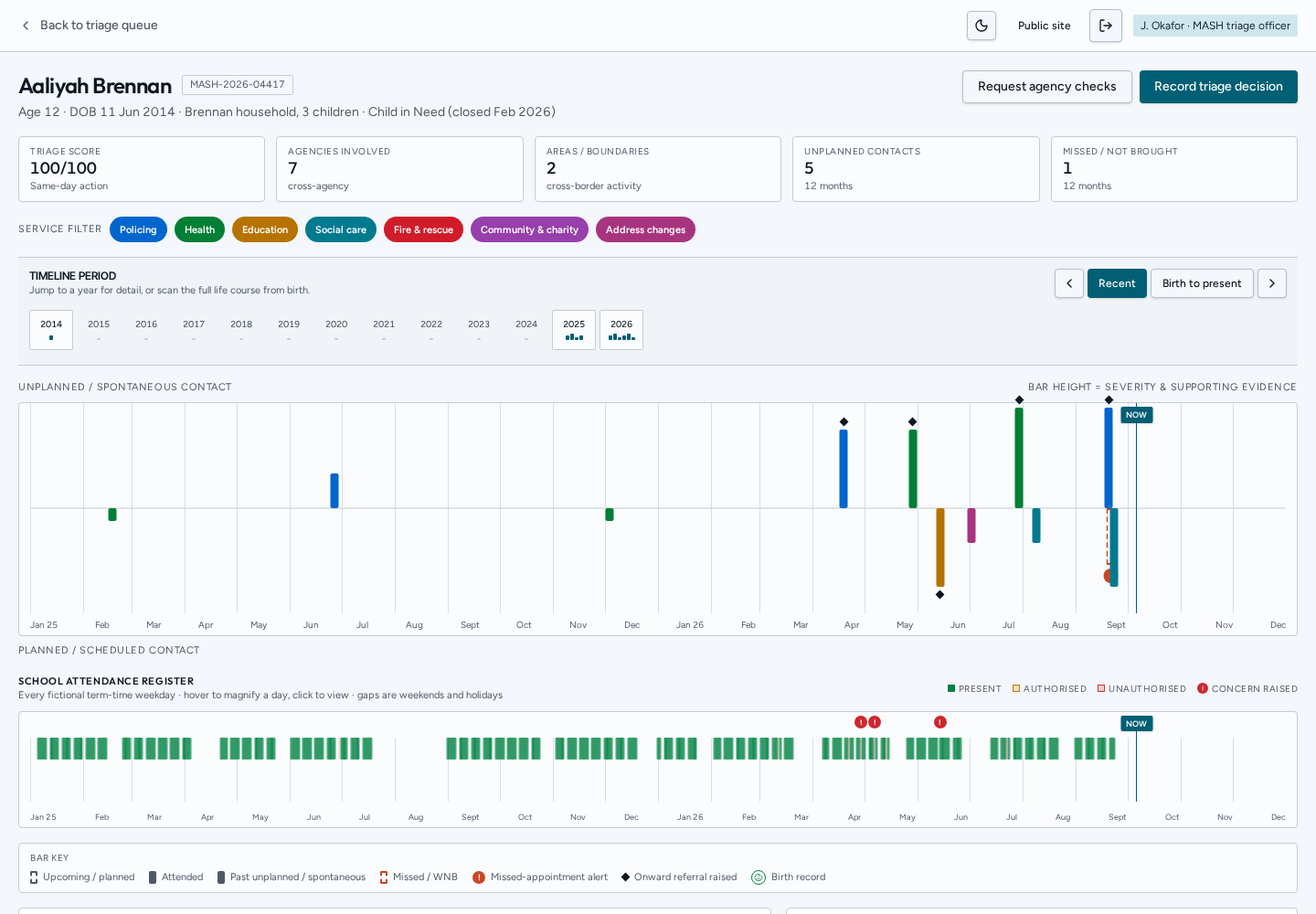
Daniel Whitcombe, 58
Autistic, living alone after his mother moved into care. Concerns from a charity, GP, fire service, housing and hospital build up while appointments are missed. Reflects themes from the Bexley SAR 'David'.
Margaret Okoye, 81
Her son cancels home care. A bank concern, a fall, a police call and a missed memory clinic come before a hospital admission in another trust.
Liam Fraser, 19
A care leaver with a mild learning disability. Visitors at his flat and a stop in another police area come before a serious injury.
All names and records in the demo are fictional.
Several agencies saw self-neglect. The review found few joined-up reasonable adjustments for autism, no clear lead agency, and earlier local learning not yet embedded.
Steven Hoskin, Cornwall (2006)
A man with a learning disability was exploited and killed. The review found many agency contacts that were never linked.
Fiona Pilkington (2007)
Repeated reports of harassment of a disabled family were handled as separate incidents.
Winterbourne View (2011)
Abuse of people with learning disabilities in a private hospital; warning signs reached several organisations.
Short summaries of public reviews. Read the full reports for exact findings.
One timeline that carries on when a young person turns 18.